The Birth of Ibiza Nightlife
Before the superclubs and the global DJ scene, Ibiza's nightlife was born out of a hippie movement, a philosopher's farmhouse, and one Argentine DJ who changed everything.
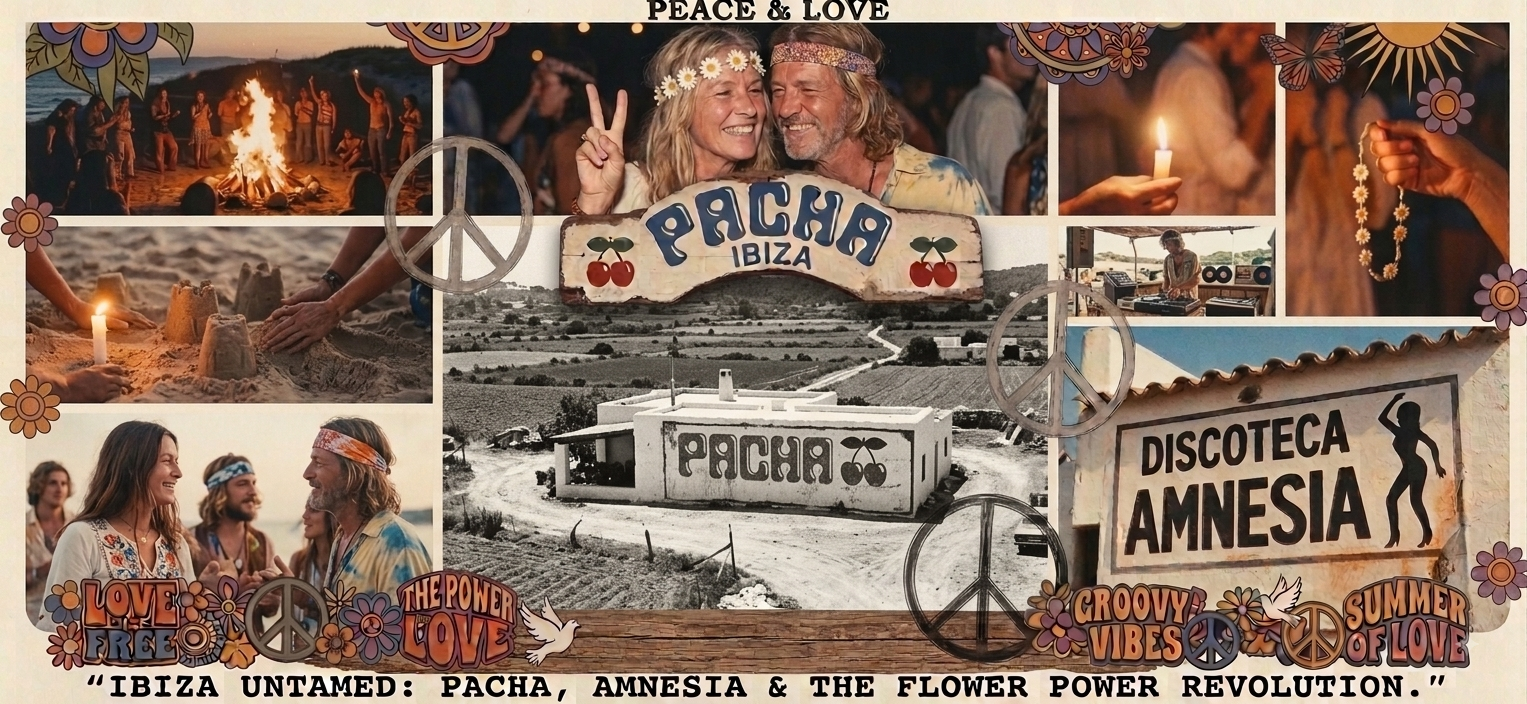
In the late 1960s, something unusual began happening on a quiet Mediterranean island that most Europeans had barely heard of. Young Americans, Britons, Germans, and Italians — students, artists, musicians, and free spirits — were leaving their countries behind. They were not running from a war. They were running from a world shaped by one: the Cold War, the Vietnam draft, the conservative politics of the post-WWII generation. The Flower Power movement had been born in San Francisco in 1967, and it was spreading fast. Its followers were looking for somewhere to land.
They followed what was known as the Hippy Trail — a loose, word-of-mouth route through Tangier, Istanbul, Nepal and Goa. Ibiza sat at the crossroads of that pilgrimage. One American who arrived in 1969 described the island at that moment: "It was like the seventeenth century. A magical, sweet island where the Ibicencos welcomed us with warm hospitality." For many who made it that far, they never left.
Through the early 1970s, Ibiza quietly became a colony of free-thinkers. People rented old rural fincas for almost nothing — sometimes less than 10,000 pesetas, roughly €50 a month. They shared communal lives, played music on beaches, and held open-air parties that stretched through the night. There were no superclubs, no DJ sets, no bouncers. There was just the island, the sea, and an atmosphere of almost total freedom.
That atmosphere is what Ricardo Urgell walked into when he opened Pacha in June 1973. Built in Ses Feixes near Ibiza Town and designed to look like a traditional Ibicencan farmhouse, Pacha was the island's first real nightclub — and it was shaped entirely by the spirit around it. It welcomed everyone. It charged almost nothing. Its ethos was the same as the hippie crowd that had already made the island their home: freedom, music, and the night as an experience rather than just a destination. BBC News later called it "the nightclub that changed Ibiza."
Three years later, in 1976, a Madrid-born philosopher named Antonio Escohotado leased a farmhouse just outside San Rafael and opened a discotheque he called El taller del olvido — The Workshop of Forgetfulness. His co-founder suggested a simpler name: Amnesia. Because when people go out at night, Escohotado believed, they go out to forget. Admission was 25 pesetas. The dance floor was open air. Sessions ran until noon the following day.
By 1981, Pacha had absorbed enough of the Flower Power spirit to turn it into a party. That year it launched Flower Power night — a weekly, psychedelic-themed evening with go-go dancers, costumes, and a soundtrack rooted in the 1960s and 70s. It became the club's first ever themed night and it has run every Saturday since. Flower Power was not nostalgia. It was a direct line back to the hippie generation that had made the island what it was.
The moment that completed the story came in 1987. An Argentine DJ named Alfredo Fiorito — who had arrived on the island with almost nothing and worked as a candlemaker, barman, and journalist before picking up a pair of turntables — had built a six-year residency at Amnesia. His sets blended house, soul, jazz, funk, and pop into something that had no name yet. That summer, four British DJs came to Ibiza on holiday: Danny Rampling, Paul Oakenfold, Nicky Holloway, and Johnny Walker. They heard Alfredo play under the open sky. They went home. And they started the UK rave scene. Rampling launched Shoom in a converted fitness centre in London. Oakenfold hosted an "Ibiza Reunion" night at Heaven. The sound that had been invented on this island had now gone global.
The full arc is impossible to miss: hippies fleeing Vietnam-era politics arrived in the late 1960s and gave the island its soul. Pacha opened in 1973 and gave that soul a home. Flower Power was born in 1981 as a direct tribute to it. And by 1987, one DJ playing under the stars at Amnesia had quietly launched a musical movement that would reshape nightlife across the entire world.
Before the superclubs and the global branding, Ibiza was already writing this story. It just took the right people, in the right place, at the right time, to hear it.